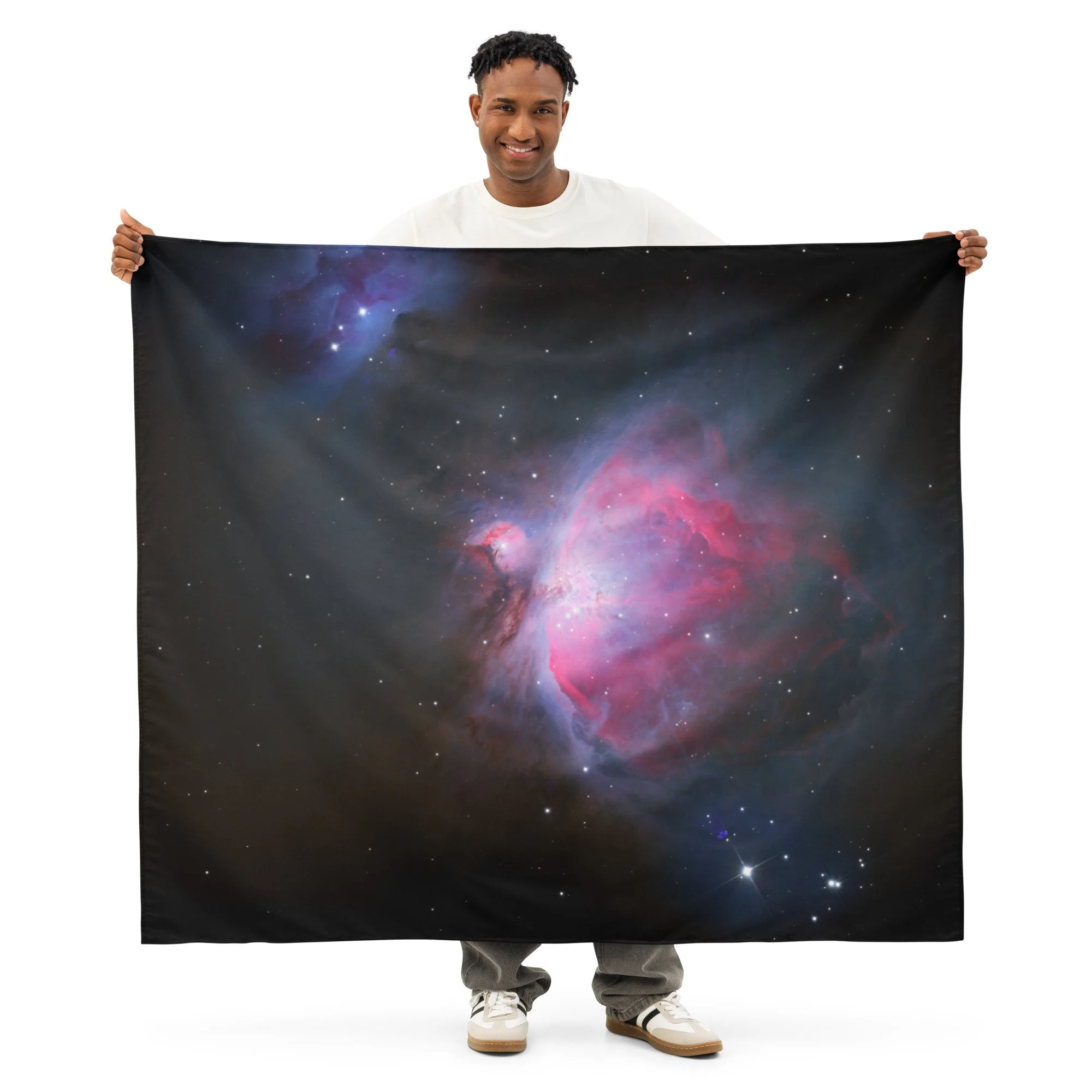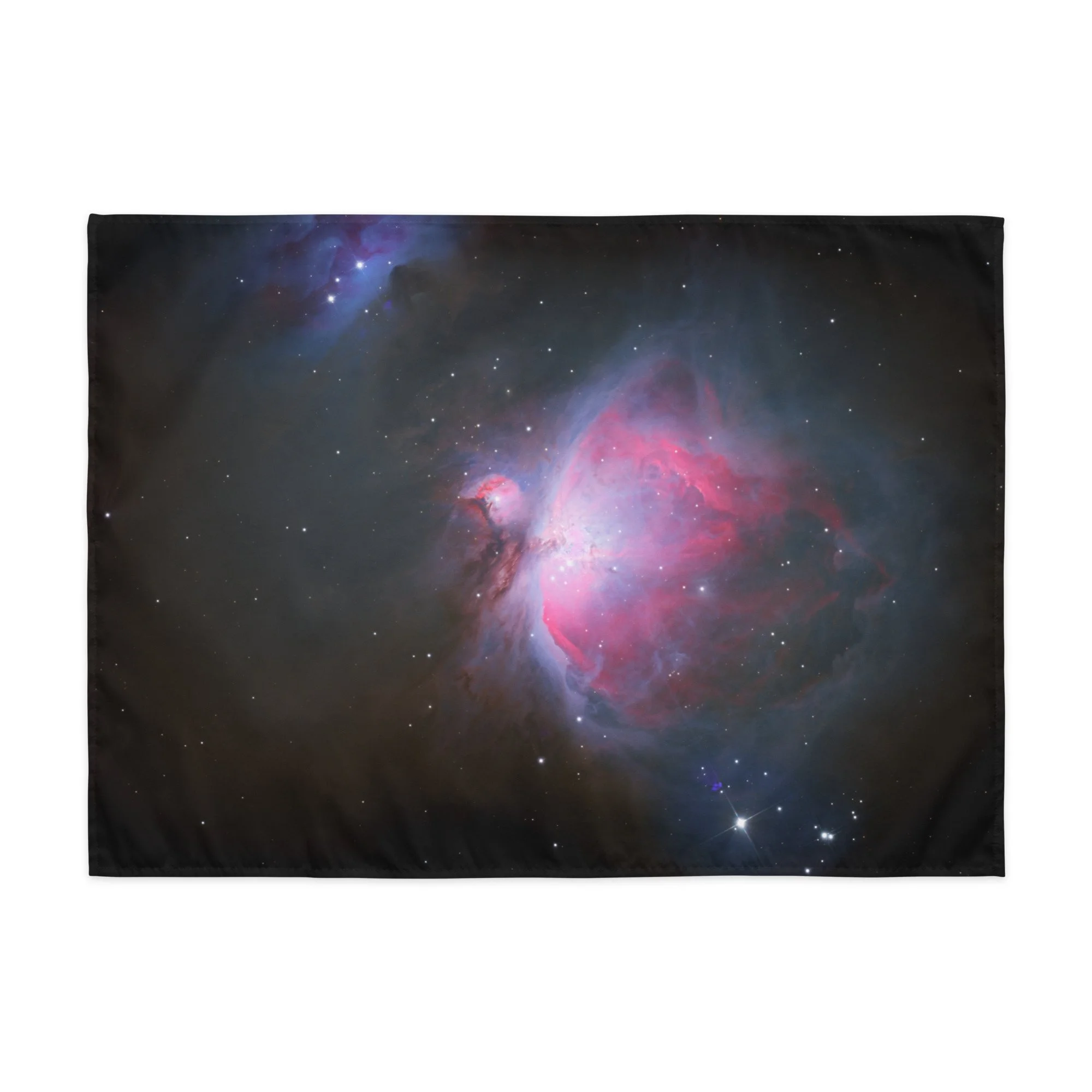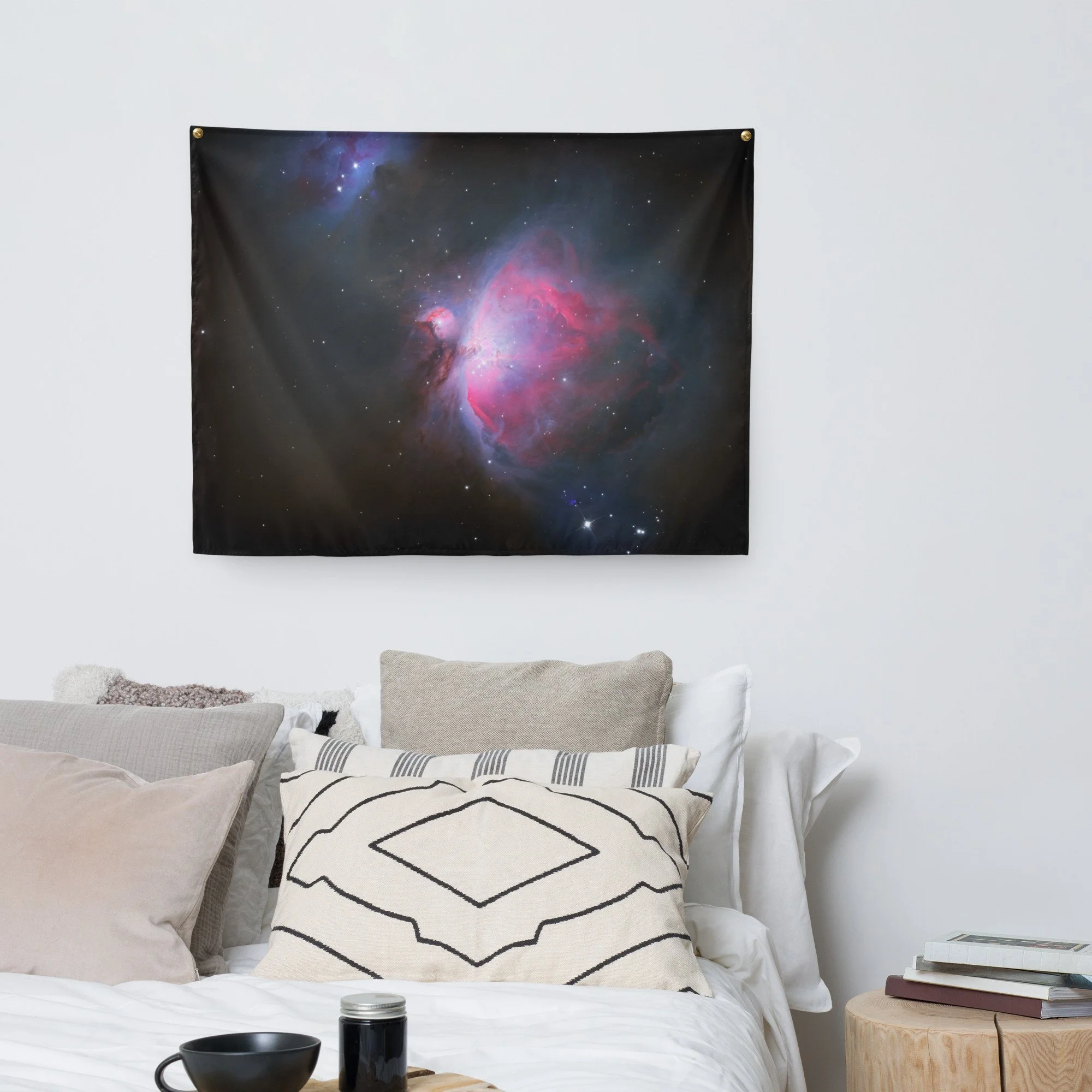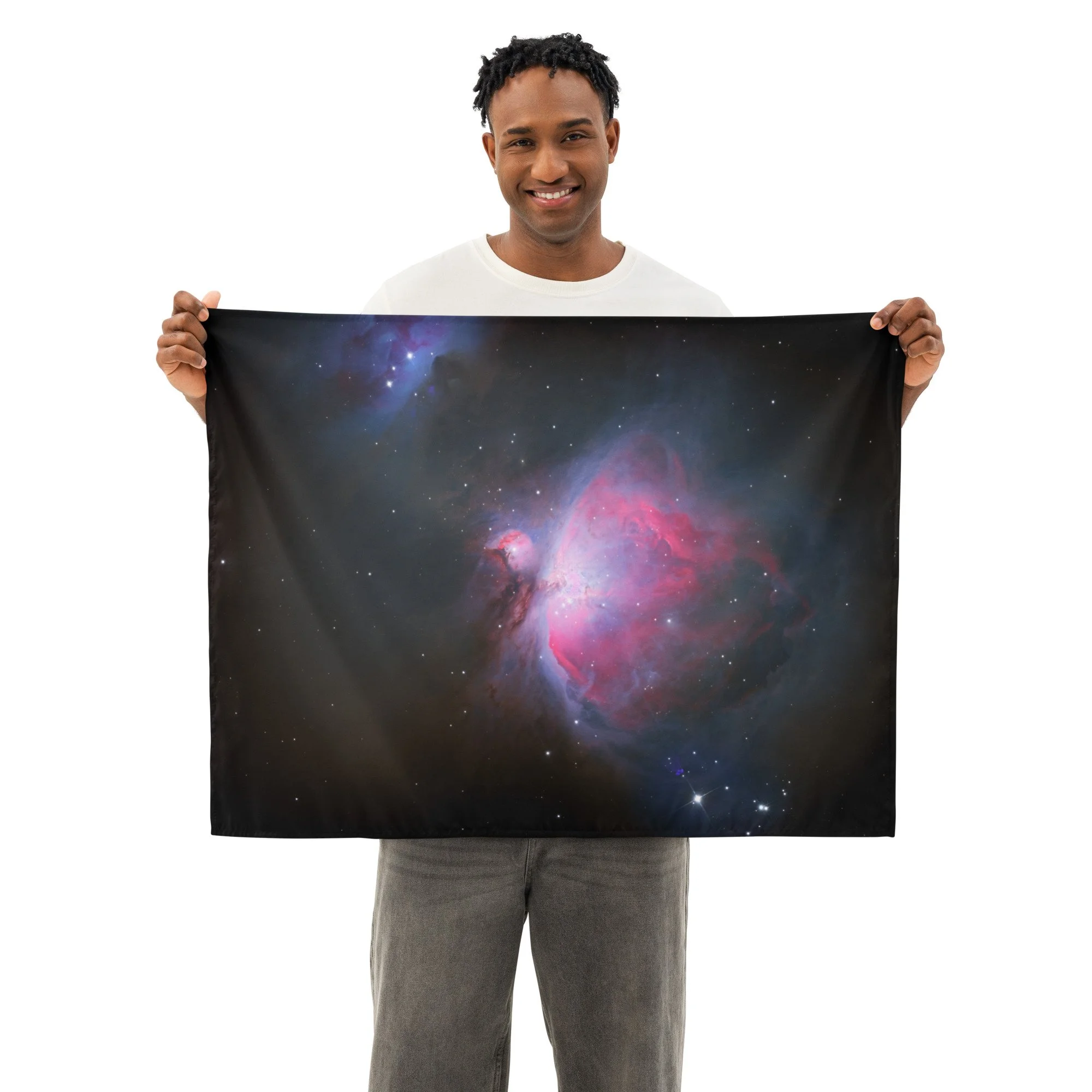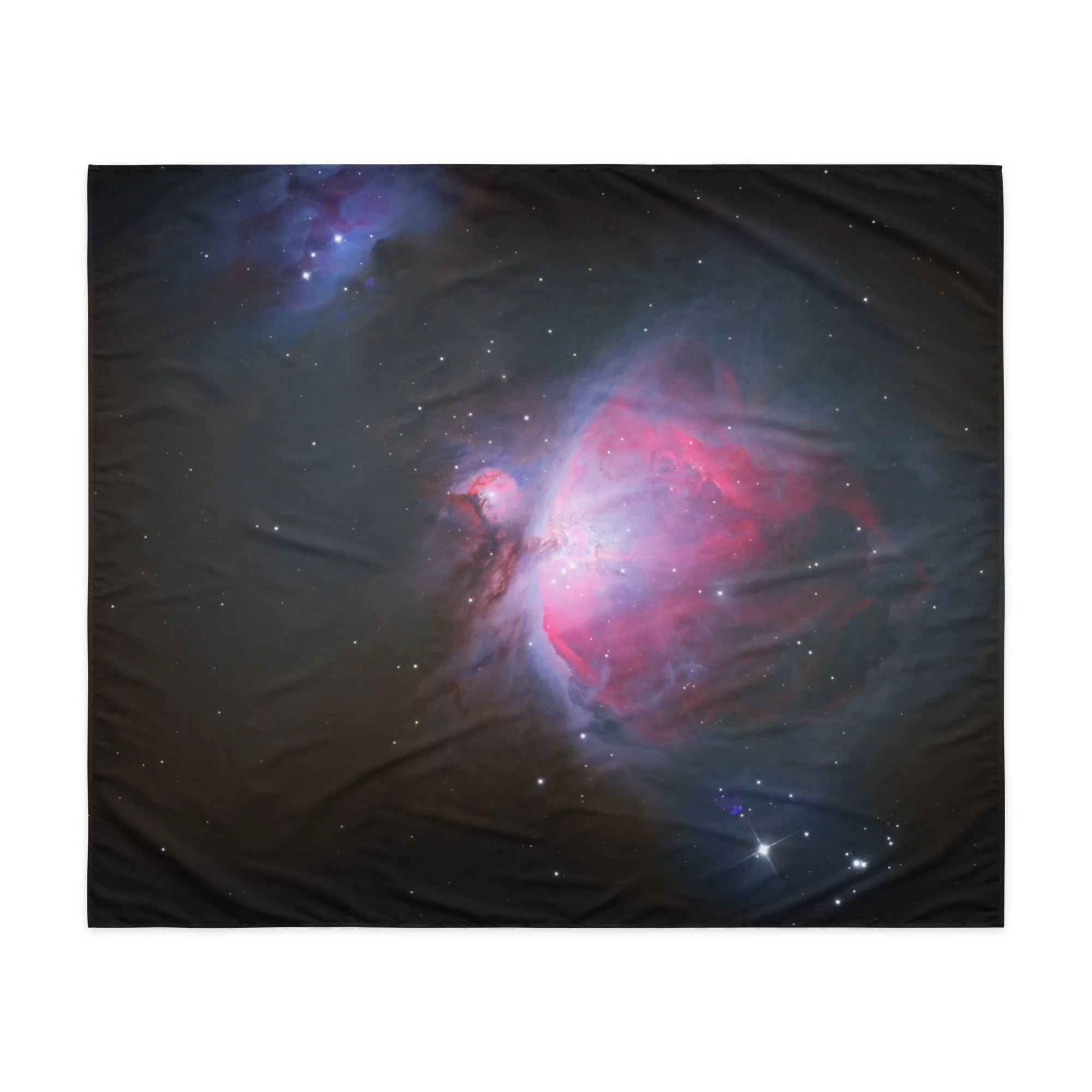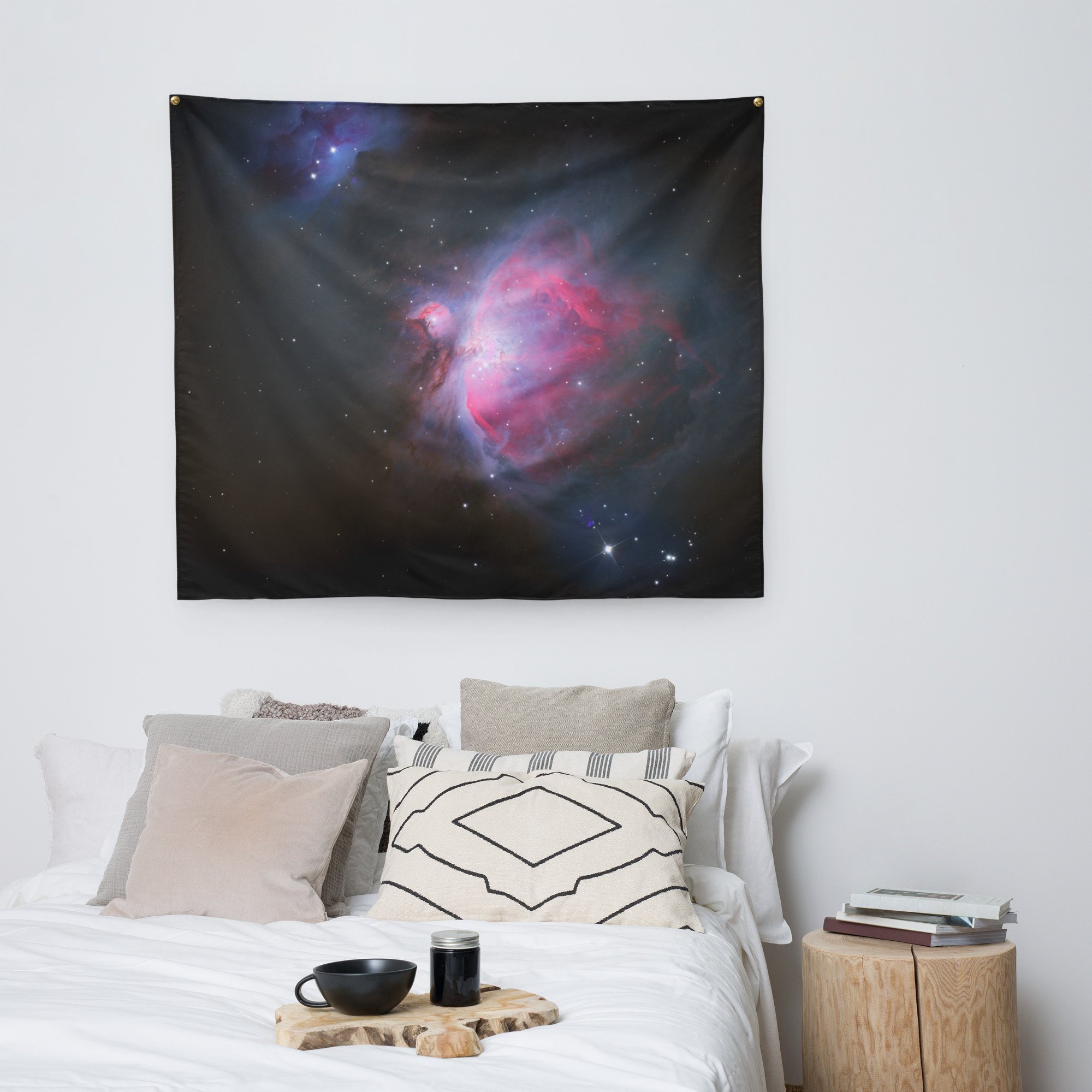
The Orion Nebula on a wall-sized tapestry — M42, the fuzzy "star" in Orion's sword that you've already seen with your own eyes on a winter night. Through a telescope it opens up into this: a glowing stellar nursery 1,344 light-years from Earth, blooming in hydrogen reds and reflected-starlight blues. It's one of the very few deep-sky objects bright enough to spot unaided, which makes it the nebula almost everyone recognizes.
The blazing core is powered by a tight knot of young stars called the Trapezium, pouring out so much ultraviolet light that they've carved visible caverns and shockwaves into the surrounding gas. Inside this cloud, new stars and entire planetary systems are forming right now — it's the closest stellar nursery to Earth and one of the most studied objects in the sky.
Real astrophotography, captured through my own telescope and printed edge to edge on soft, lightweight fabric. Hang the most famous nebula in the sky across an entire wall. No AI. No stock. Just real space on your wall.
The Orion Nebula on a wall-sized tapestry — M42, the fuzzy "star" in Orion's sword that you've already seen with your own eyes on a winter night. Through a telescope it opens up into this: a glowing stellar nursery 1,344 light-years from Earth, blooming in hydrogen reds and reflected-starlight blues. It's one of the very few deep-sky objects bright enough to spot unaided, which makes it the nebula almost everyone recognizes.
The blazing core is powered by a tight knot of young stars called the Trapezium, pouring out so much ultraviolet light that they've carved visible caverns and shockwaves into the surrounding gas. Inside this cloud, new stars and entire planetary systems are forming right now — it's the closest stellar nursery to Earth and one of the most studied objects in the sky.
Real astrophotography, captured through my own telescope and printed edge to edge on soft, lightweight fabric. Hang the most famous nebula in the sky across an entire wall. No AI. No stock. Just real space on your wall.